

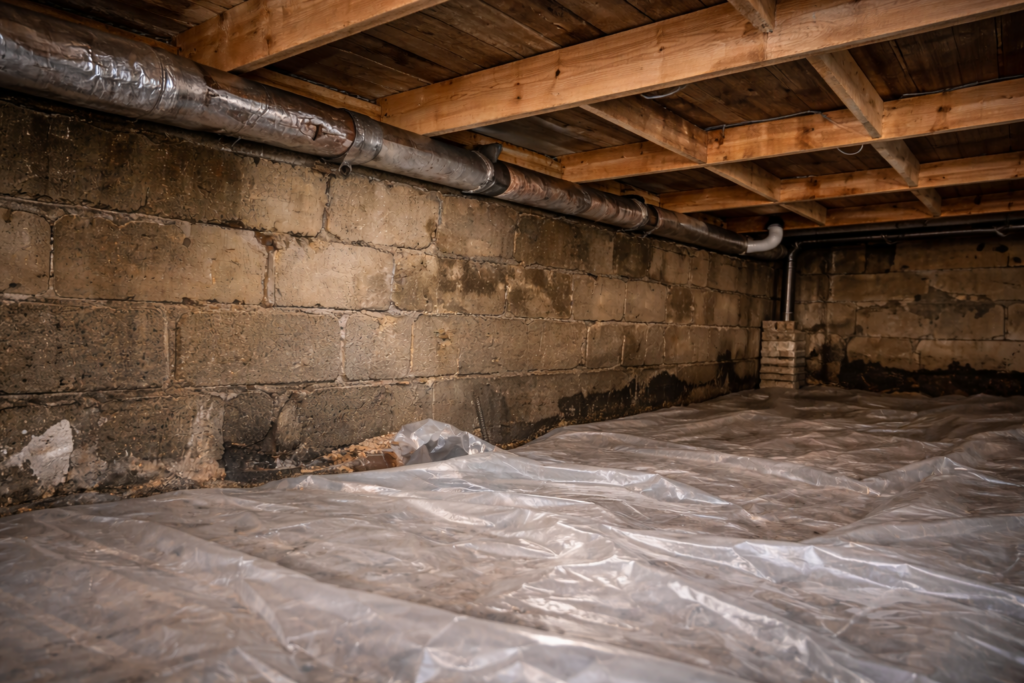
Moisture problems often start below your home. The foundation is the first place water shows up. Catching issues early can prevent costly structural damage and unhealthy indoor air.
One of the most common signs is musty odors. If your basement or crawl space smells damp, moisture is already present. Odors often appear before visible damage.
Efflorescence is another red flag. This white, chalky residue forms when water moves through concrete or masonry. It signals ongoing moisture migration, not a surface issue.
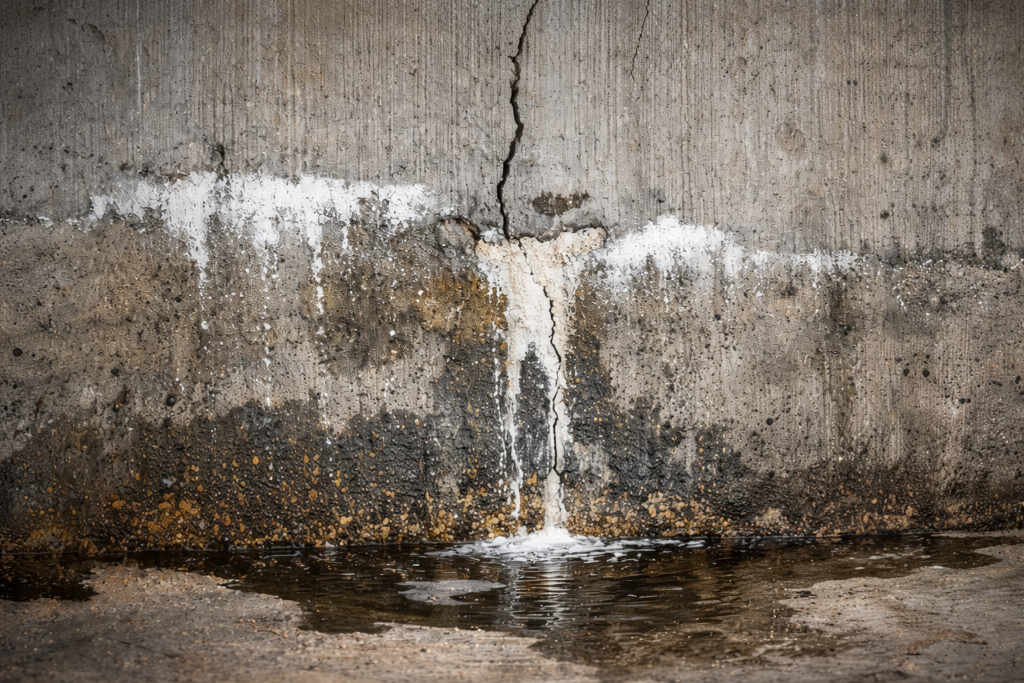
Cracks in foundation walls deserve attention. Hairline cracks can be normal. But widening cracks or damp edges suggest water pressure outside the home. Over time, this pressure weakens structural materials.
Watch for peeling paint or bubbling coatings on basement walls. Moisture trapped behind finishes pushes them away from the surface. This often indicates poor drainage or vapor control.
High indoor humidity is another warning sign. Condensation on windows or ductwork near lower levels points to excess moisture. Left untreated, this creates ideal conditions for mold growth.
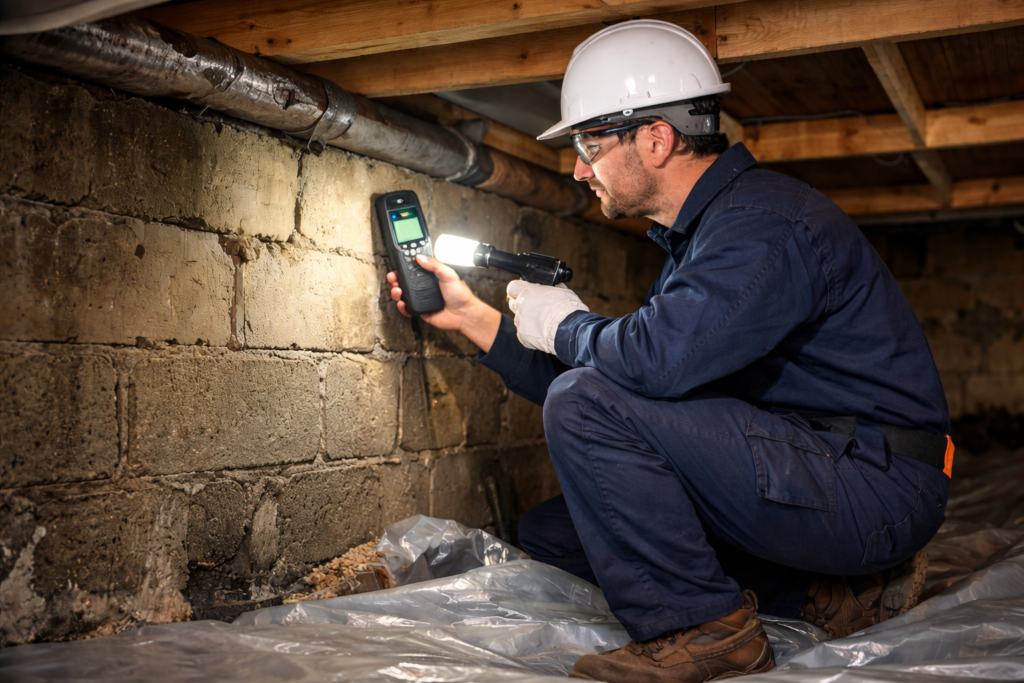
Standing water or damp soil in a crawl space is never normal. Even small amounts increase wood rot risk and attract pests. Moisture here directly affects floor comfort and indoor air quality.
At Barrier South, we use building science to trace moisture back to its source. Energy audits, moisture diagnostics, and foundation insulation work together to protect your home. Early action keeps your foundation dry, durable, and healthy.