
Moisture problems are often blamed on roof leaks, plumbing failures, or flooding. While those issues can certainly cause damage, many moisture problems begin with something far less obvious: pressure differentials. Understanding how air pressure affects a building is a key part of building science and can help homeowners, builders, and contractors prevent costly repairs and indoor air quality concerns.
What Are Pressure Differentials?
A pressure differential occurs when the air pressure in one area of a building is different from the pressure in another area. Air naturally moves from higher-pressure areas to lower-pressure areas, seeking balance. This movement happens constantly and is influenced by factors such as wind, HVAC systems, exhaust fans, temperature differences, and even the height of a building.
When air moves through a building enclosure, it carries moisture with it. This moisture transport is often far more significant than simple vapor diffusion through building materials. As a result, pressure-driven airflow can introduce large amounts of moisture into walls, attics, crawlspaces, and other hidden areas.
How Moisture Travels Through Air Leaks
Every building has small openings and gaps. These can be found around electrical penetrations, plumbing pipes, recessed lighting, windows, doors, and framing connections. When pressure differences exist, air is pushed or pulled through these openings.
During colder months, warm indoor air often moves outward through the building envelope. Because warm air can hold more moisture, it carries water vapor into wall cavities and attics. When that air encounters cooler surfaces, the moisture condenses into liquid water.
In warmer, humid climates, the opposite can occur. Humid outdoor air may be drawn into cooler building assemblies where condensation forms on air-conditioned surfaces. Over time, repeated condensation cycles can create ideal conditions for mold growth and material deterioration.
Common Causes of Pressure Imbalances
Several factors contribute to pressure differentials inside buildings:
HVAC Systems
Poorly balanced heating and cooling systems can create areas of positive or negative pressure. Leaky ductwork can worsen the problem by moving air into or out of spaces where it is not intended.
Exhaust Equipment
Bathroom fans, kitchen range hoods, and clothes dryers remove indoor air. If replacement air is not properly provided, negative pressure can develop, pulling humid outdoor air into the building.
Wind Effects
Wind striking a building creates positive pressure on one side and negative pressure on the opposite side. This pressure difference can drive air and moisture through the building enclosure.
Stack Effect
Warm air rises naturally. During heating seasons, warm indoor air moves upward and escapes through upper portions of the building. This creates negative pressure in lower levels, drawing outside air inward.
Signs of Pressure-Related Moisture Problems
Many moisture issues caused by pressure differentials remain hidden for years. However, there are often warning signs that indicate a problem may exist.
Common symptoms include:
- Persistent musty odors
- Condensation on windows
- High indoor humidity
- Mold growth in corners or closets
- Uneven temperatures throughout the home
- Damp insulation
- Peeling paint or staining on surfaces
- Increased energy bills
Because these symptoms can have multiple causes, professional testing is often needed to determine whether pressure imbalances are contributing to the issue.
The Role of Building Performance Testing
Identifying pressure-driven moisture problems requires more than a visual inspection. Building performance professionals use specialized diagnostic tools to understand how air moves through a structure.
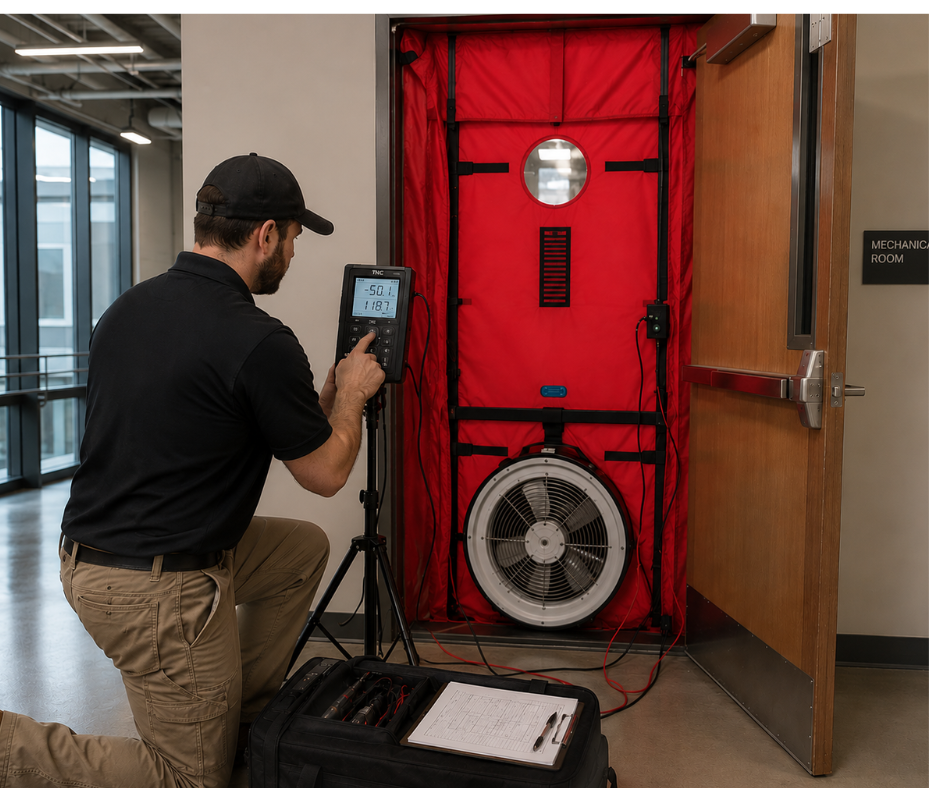
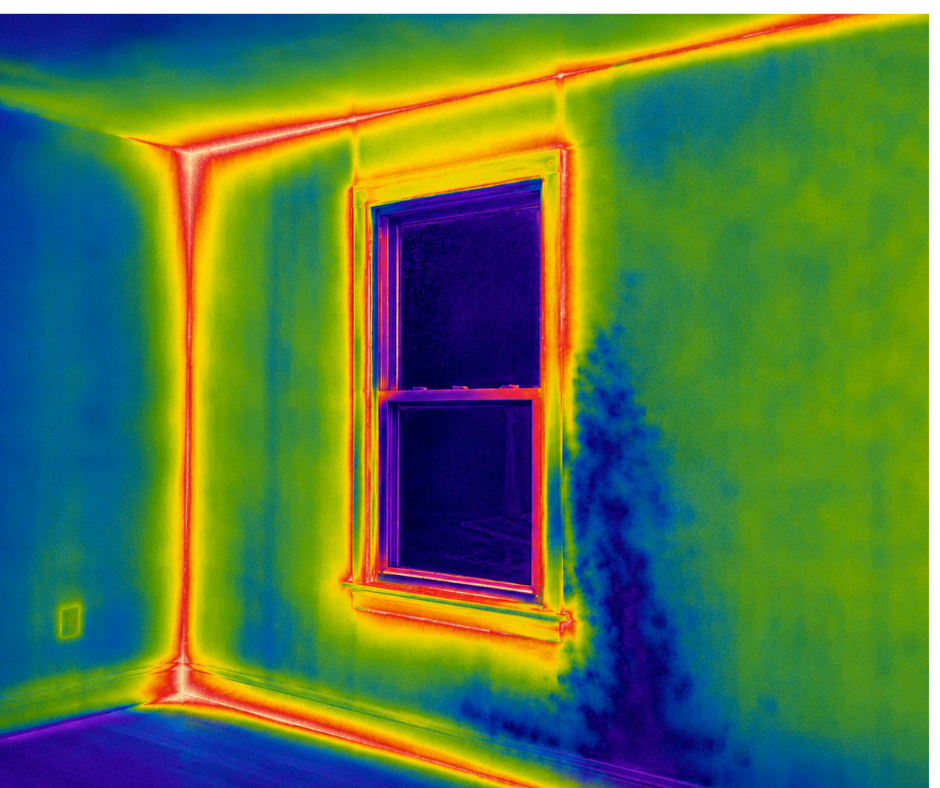
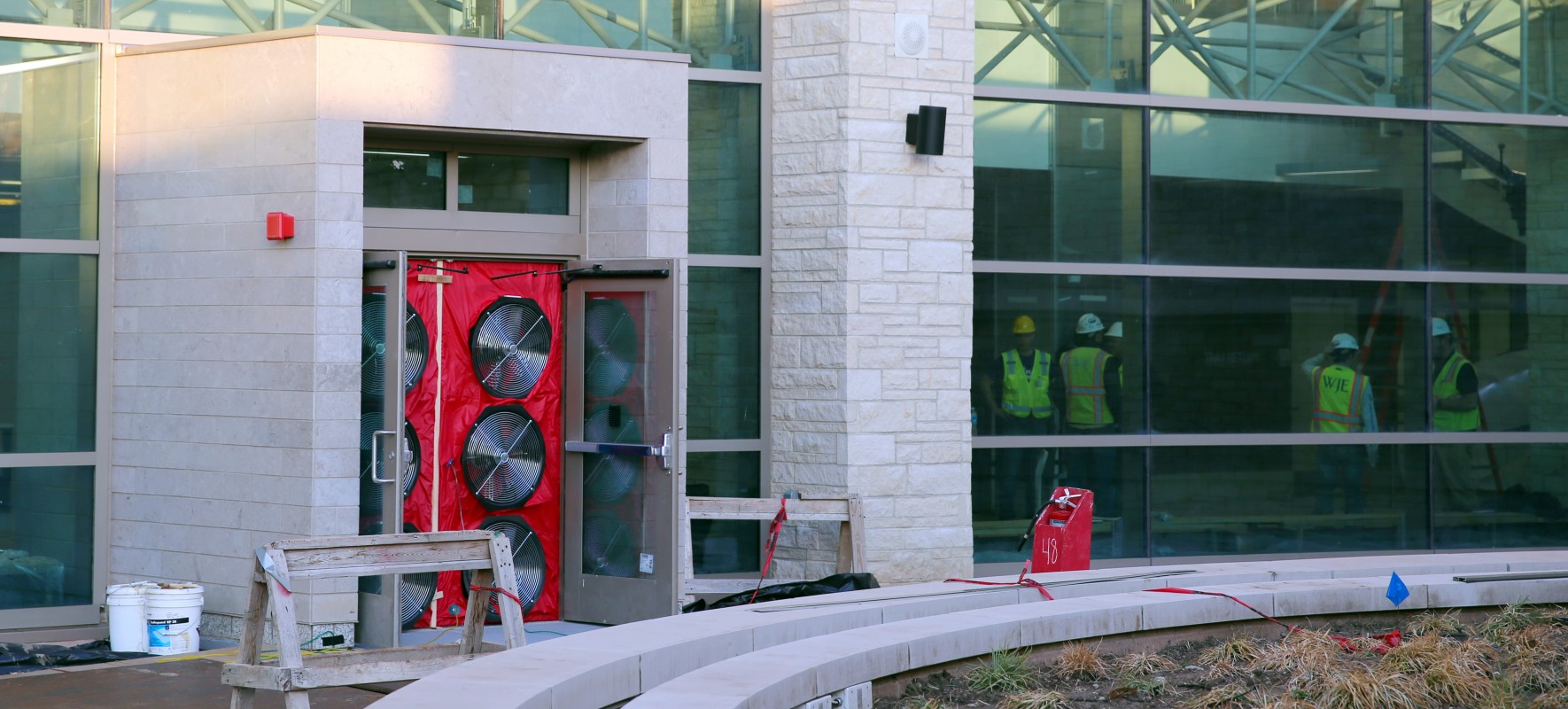
Blower door testing measures the overall airtightness of a building and helps locate leakage pathways. Thermal imaging can reveal temperature differences associated with air movement and moisture accumulation. Pressure diagnostics provide additional insight into how different areas of the building interact.
These tools allow building professionals to identify the root cause rather than simply treating visible symptoms.
Solutions for Managing Pressure and Moisture
The most effective solution is controlling air movement. Air sealing gaps and penetrations reduces the pathways that allow moisture-laden air to travel through the building. Proper insulation helps maintain surface temperatures above the dew point, reducing condensation risk.
HVAC systems should also be properly designed and balanced to avoid creating unnecessary pressure imbalances. In some cases, controlled ventilation systems can provide fresh air while maintaining pressure balance and humidity control.
By addressing airflow, insulation, and ventilation together, building owners can significantly reduce the risk of moisture-related damage.
Frequently Asked Questions
Q: Can pressure differences really cause mold growth?
A: Yes. Pressure-driven airflow can carry moisture into hidden spaces where condensation occurs, creating conditions that support mold growth.
Q: Are moisture problems always visible?
A: No. Many pressure-related moisture issues develop inside wall cavities, attics, or crawlspaces long before visible signs appear.
Q: How can I find out if my home has pressure-related moisture issues?
A: A professional energy audit that includes blower door testing and pressure diagnostics is one of the most effective ways to identify these problems.